Flag oral-availability risk before costly studies.
Rion AI helps medicinal chemists flag absorption and exposure risk earlier in lead optimization, before a series consumes scarce synthesis time, assay capacity, and experimental budget. Built on quantum-inspired molecular intelligence, Rion is designed to support faster, better-informed progression toward a development candidate.
Start with a qualifying call to discuss your series, your workflow, and whether Rion is a fit.

Oral-availability tradeoff map
The expensive mistake is finding out too late.
Teams often make the synthesis and prioritization decisions that shape a program before oral-availability risk is fully visible. By the time liabilities appear in costly studies, synthesis time, assay capacity, and experimental budget have already been committed.

Quantum-inspired molecular intelligence, starting with lead optimization.
Rion AI is building molecular intelligence for the physical behavior of molecules. The company begins with small-molecule lead optimization, where medicinal chemistry teams need earlier visibility into the properties that shape oral availability, exposure, and candidate progression.
Rion's technology is quantum-inspired: designed around molecular behavior without requiring quantum hardware. It combines molecular structure, physical AI reasoning, predictive models, and uncertainty-aware outputs to help scientists reason before the next experimental cycle.
Lead optimization is the first application. Over time, Rion is building toward broader molecular intelligence for chemistry, materials, digital twins, and artificial intelligence systems that need a deeper model of molecular reality.
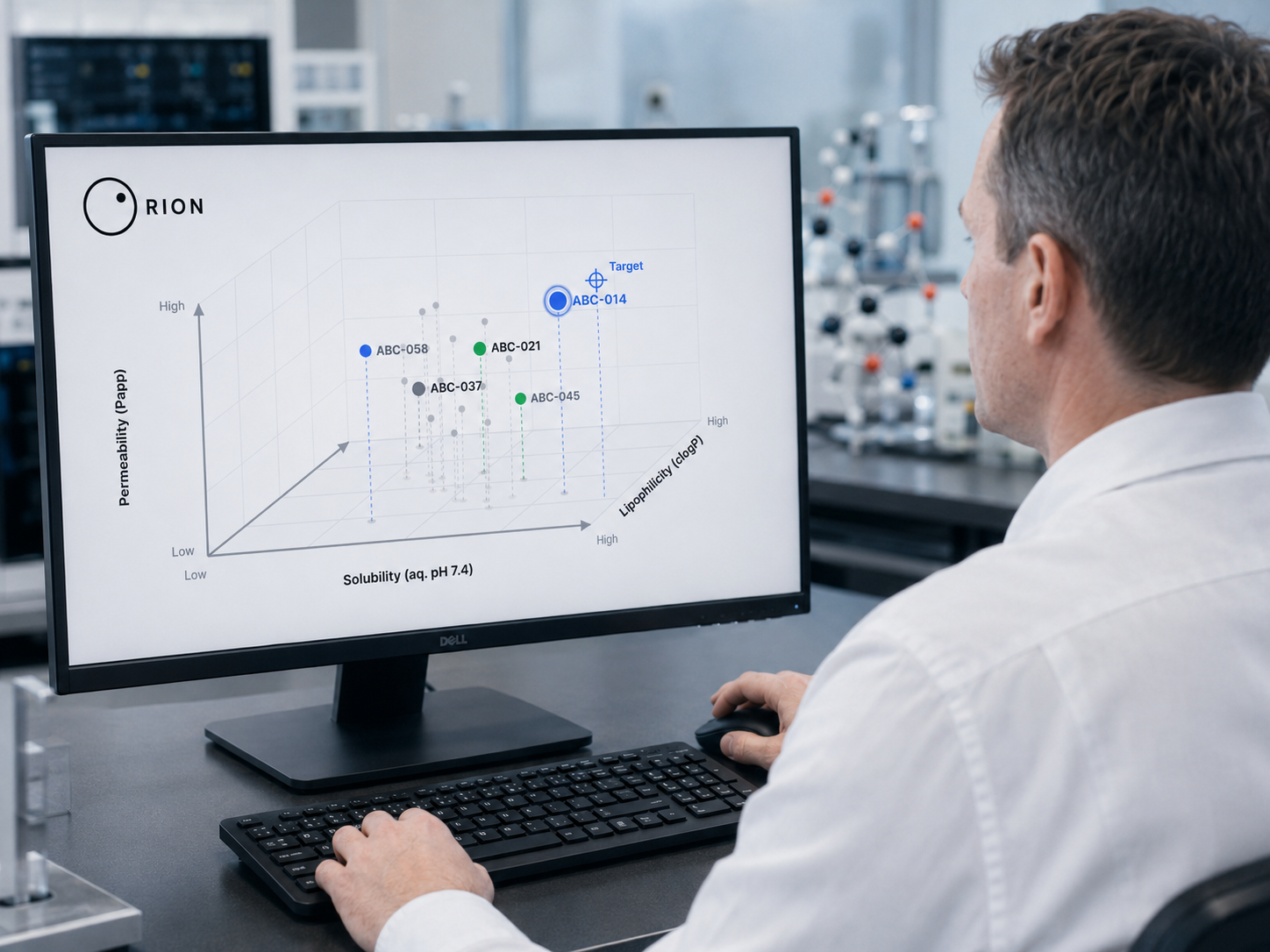
Bring oral-availability questions forward in the lead-optimization cycle.
If you are advancing a small-molecule series and want earlier visibility into absorption-related liabilities, request an in silico absorption analysis. We will start with a qualifying call to understand your chemistry, program stage, and whether Rion is a fit.
Built for medicinal chemistry teams moving quickly with limited experimental budget.